Native Texas Vegetation & Xeriscaping
New or existing homeowners may choose to partially or fully use harvested rainwater to irrigate small grassy areas, landscapes, and gardens, or to provide water for local wildlife. Many people prefer harvested rainwater for landscape use because it contains no added disinfectants (like chlorine or chloramine) and is typically low in dissolved minerals compared with many groundwater sources.
Collected rainwater can also supplement a home that already has a public water supply or a well—dedicating stored rainwater for irrigation, wildlife support, or as a limited emergency supply (for example, during outages). Regardless of the source, irrigation efficiency and plant choice are what ultimately determine how far your stored water will go.
If rainwater is only intended for irrigation, a new or existing home’s roof material, roof footprint, and storage tank size are largely a homeowner decision—mostly constrained by space, budget, and how much water you want to carry through dry periods. If your irrigation goal requires very large volumes (often more than 10,000 gallons of storage), consider engaging a rainwater professional to help with design and sizing.
Storage tank considerations
- Keep storage cooler when possible. Shade and shielding from direct sun can reduce water temperature and help limit conditions that encourage microbial growth.
- Plan for basic monitoring and maintenance. Even for irrigation-only systems, it’s smart to periodically check for odors, algae growth, sediment accumulation, and screen/filter condition.
Irrigation water requirements
Grass lawns
For many homeowners, turfgrass can be the single largest landscape water use during the growing season (roughly April through October). Demand varies with weather and soil conditions, and typically peaks in the hottest months.
To estimate weekly irrigation volume for a lawn, start with a simple rule of thumb:
- 1 inch of water over 1 square foot is about 0.623 gallons.
That means:
gallons needed ≈ area (ft²) × inches applied × 0.623
Example: 1 inch once per week
- Assume a 100 ft² grassy area
- Apply 1 inch per week
Calculation:
- 100 ft² × 1 inch × 0.623 ≈ 62 gallons per watering event
Scaling up:
- 1,000 ft² × 1 inch × 0.623 ≈ 623 gallons per week
Some turf types (for example, St. Augustine) may require more frequent watering—sometimes twice per week in peak heat. That level of demand can be difficult to sustain with rainwater-only irrigation during common Texas summer droughts, because it implies large roof catchment and storage capacity.
If rainwater is your only supply, keep grassy areas to a minimum and irrigate efficiently (early morning timing, well-tuned coverage, and avoiding runoff).
Better grass options (Central Texas)
Local soil type and depth should be considered when selecting turf. Shade, foot traffic, and weekly water requirements also matter—especially during drought.
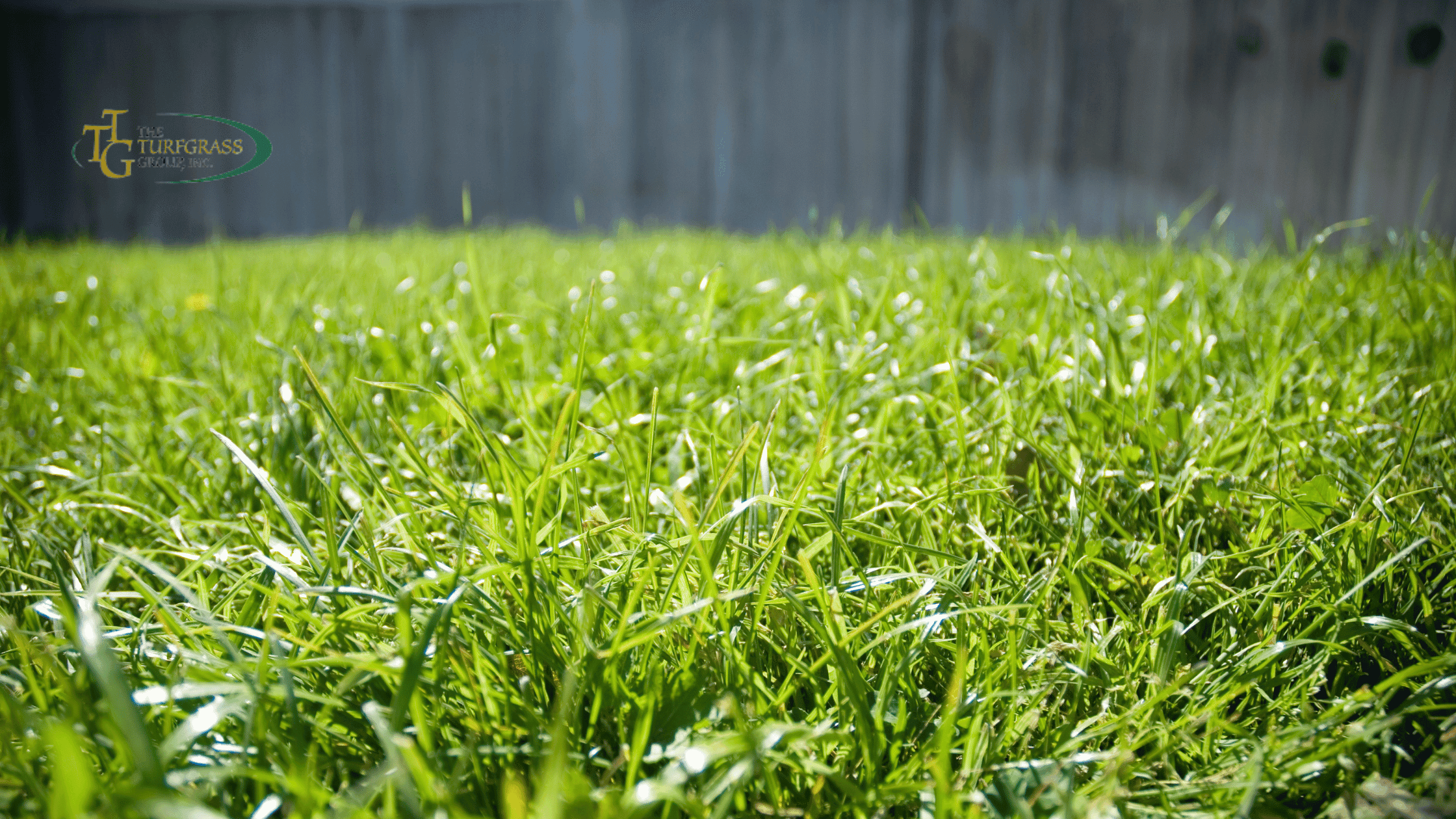
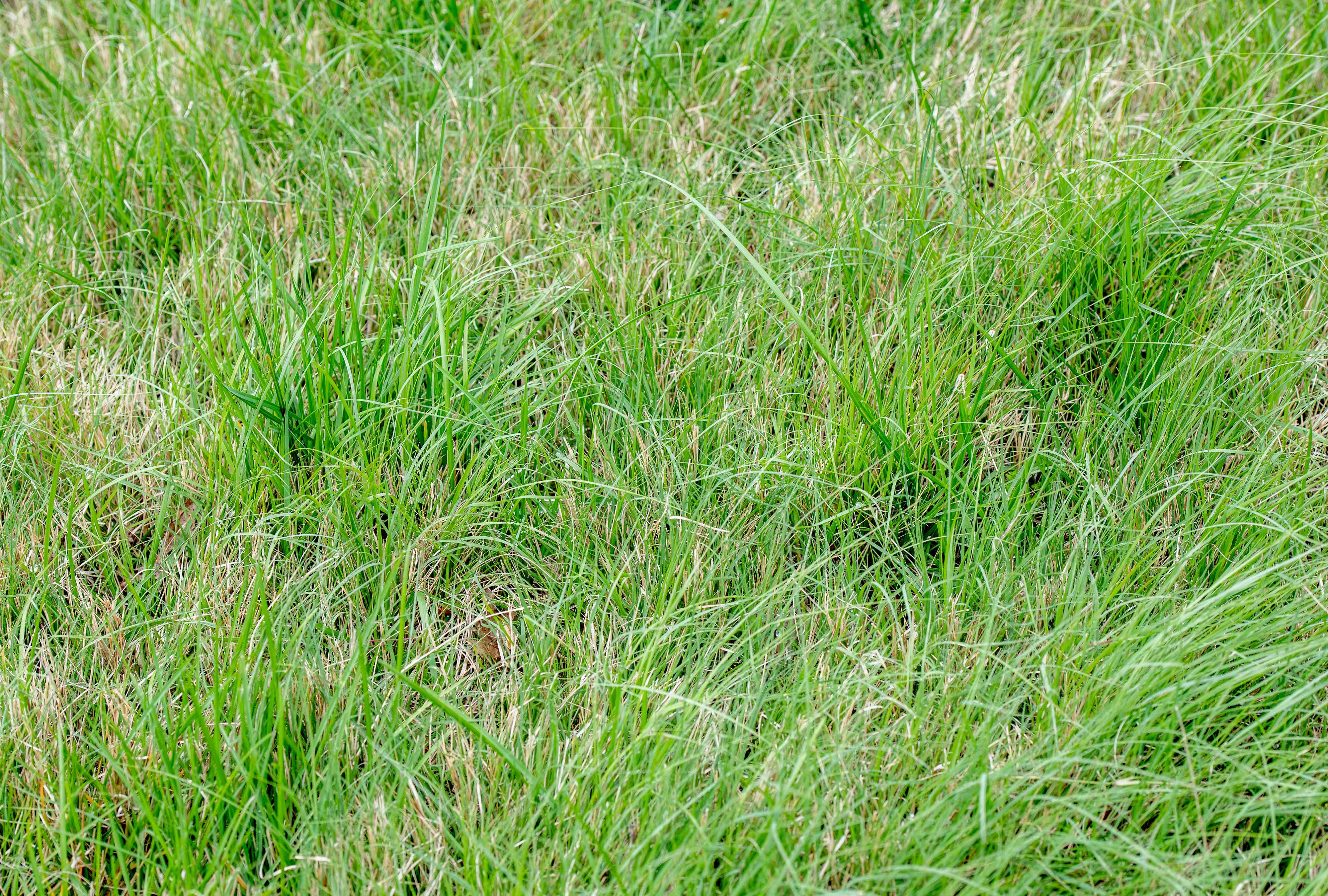
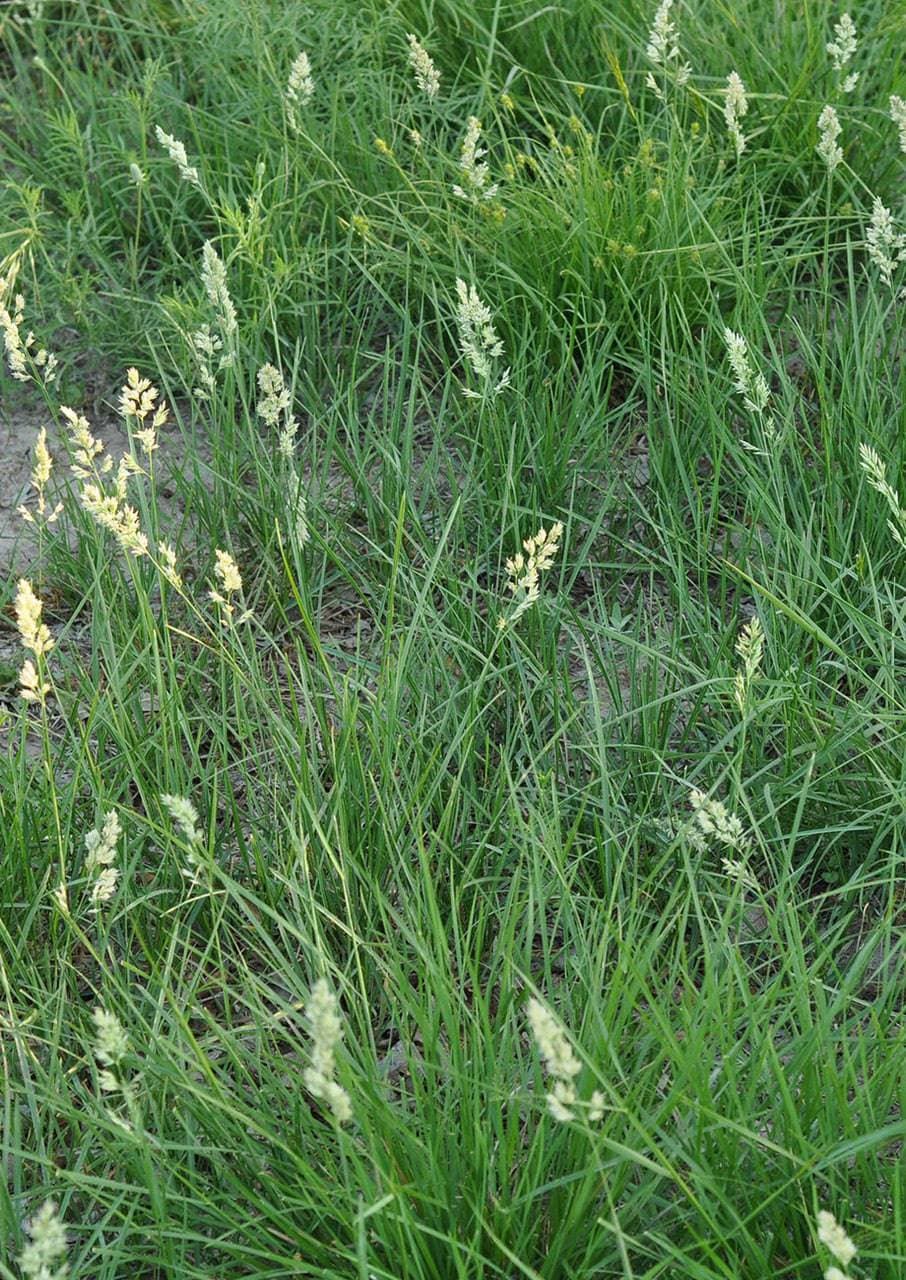
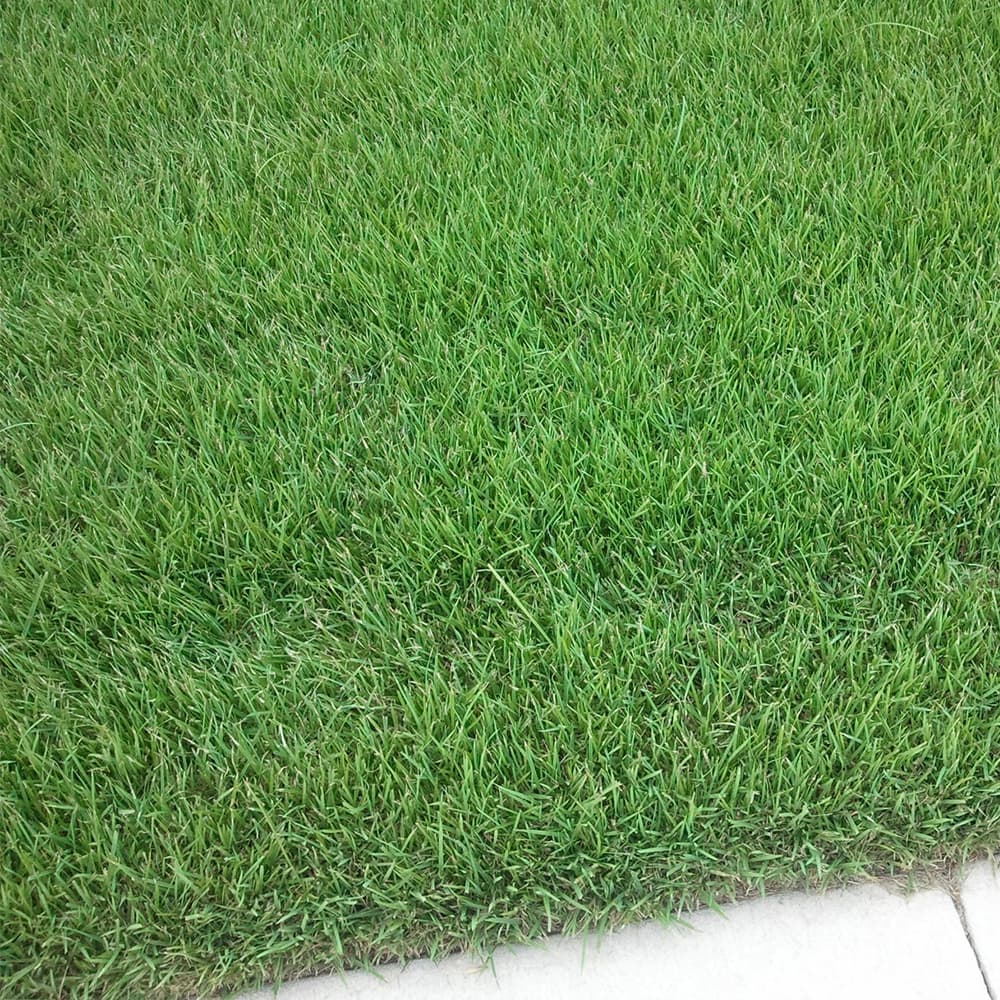
Bermuda grass
Bermuda grass excels in hot weather and full sun, and can be relatively water-efficient once established. It forms a dense turf that can handle considerable foot traffic and recover quickly from damage.
- Establishment: requires frequent watering initially
- Drought-period use (after established): roughly 1.0–1.5 inches/week
- Maintenance: fast-growing; typically requires frequent mowing
Buffalograss (Texoka)
Buffalograss is a Texas native and a strong choice for low-maintenance Central Texas lawns. Once established, it can be very water-efficient and forms a soft blue-green turf.
- Strengths: drought tolerance, low maintenance
- Limitations: not ideal for shade or heavy foot traffic
- Establishment: requires frequent watering initially
- Drought-period use (after established): roughly 1.0 inch/week
Texas bluegrass
Texas bluegrass (often sold as a hybrid) can work well in sun or partial shade, including under some tree canopies, and may retain green color longer than many warm-season grasses.
- Best use: ground cover in lower-traffic areas
- Foot traffic: not tolerant of moderate/heavy traffic
- Establishment: requires frequent watering initially
- Drought-period use (after established): roughly 1.0–1.5 inches/week
Zoysia grass (Palisades)
Zoysia can provide a dense, weed-resistant turf that tolerates moderate foot traffic and is known for resilience to heat and periodic drought.
- Growth habit: slower-growing; typically needs less frequent mowing
- Sun: performs best in full sun
- Establishment: requires frequent watering initially
- Drought-period use (after established): roughly 1.0–1.5 inches/week
Landscape plants around the home
Landscaping can be nearly as water-intensive as lawns, but it is often easier to irrigate efficiently using focused methods like subsurface or drip irrigation. When using stored rainwater, conserving what you’ve collected is encouraged.
The following is a partial list of low-water to drought-resistant trees, shrubs, perennials, ornamental grasses, vines, wildflowers, and open-field mixtures. Many are native, support local ecosystems, and benefit wildlife including birds, bees, and butterflies.
City of Austin: Native and Adopted Landscape Plants (examples)
Trees (large): Texas Ash, Cedar Elm, Monterey Oak
Trees (small): Anacacho Orchid Tree, Desert Willow, Goldenball Leadtree, Texas Mountain Laurel, Lacey Oak, Texas Persimmon, Pomegranate, Retama, Flameleaf Sumac
Shrubs: Agarita, Agave, Black Dalea, Flame Acanthus, Fragrant Mimosa, Texas Lantana, Texas Dwarf Palmetto, Turk’s Cap, Paleleaf Yucca, Red Yucca, Softleaf Yucca
Perennials: Calylophus, Blackfoot Daisy, Damianita, Gayfeather, Hymenoxys, Plumbago, Pride of Barbados, Yellow Bird of Paradise, Purple Coneflower, Cedar Sage, Majestic Sage, Texas Betony
Ornamental grasses: Mexican Feather Grass, Sideoats Grama
Vines: Crossvine, Trumpet Vine, Virginia Creeper (keep away from wooden structures)
Native American Seed (Junction, Texas)
Wildflowers: Blue Flax, Four-Wing Saltbrush, Green Milkweed, Mountain Pinks, Peppergrass, Prairie Parsley, Prairie Goldenrod, Sleepy Daisy, Smooth White Penstemon, Spotted Beebalm, White Rosinweed
Open-field mixtures: Prairie Starter (native tallgrass mix), Blackland Prairie Mix, Caliche Mix
Gardens
For vegetable beds, herb gardens, and ornamental plantings, hand watering can work well for small areas; for larger areas, a dedicated drip system can deliver water efficiently where it’s needed.
Xeriscaping in Texas (including HOA rules)
Xeriscaping is a water-efficient landscaping approach that reduces the need for supplemental irrigation through smart design and plant selection. In Texas—where hot summers, high evapotranspiration, and variable rainfall can drive high outdoor water use—xeriscaping typically emphasizes hydrozoning (grouping plants by water needs), using native or well-adapted species, improving soil where appropriate, applying mulch to reduce evaporation, and using targeted irrigation (often drip) only where needed.
If you live in a neighborhood with a Homeowners Association (HOA), xeriscaping projects may need to comply with deed restrictions and published landscape standards. HOAs commonly require an application/approval process and may regulate visible elements like turf coverage, plant height, edging materials, hardscape/rock coverage, and ongoing maintenance (for example, keeping beds weed-free and plants healthy). When planning a water-conserving landscape, review your HOA documents and any local city ordinances, and submit a simple plan (plant list, bed layout, and materials) before you remove turf or change the front-yard appearance.
Texas Property Code §202.007 (water-conserving practices)
Texas Property Code §202.007 limits what a property owners’ association (HOA/POA) may prohibit in deed restrictions. In general, it provides that an association may not include or enforce provisions that prohibit or restrict a property owner from (among other things) using drought-resistant landscaping or water-conserving natural turf, installing rain barrels or rainwater harvesting systems, implementing efficient irrigation systems (including drip), or composting vegetation (including leaving grass clippings uncollected on grass). A provision that violates these prohibitions is void.
The same section also allows associations to regulate certain details for aesthetics and placement (for example, visibility limitations for irrigation components), and it expressly allows regulation of gravel/rocks/cacti and general yard/landscape maintenance so long as the rules do not prohibit water-conserving designs. It also permits an association to require a plan submission for drought-resistant landscaping or water-conserving turf and states the association may not unreasonably deny/withhold approval or unreasonably determine a proposal is aesthetically incompatible. Full text: Texas Property Code §202.007.