Benefits of Rainwater Harvesting
Discover how rainwater harvesting can save you money, protect the environment, and provide water security for your property in the Middle Trinity region.
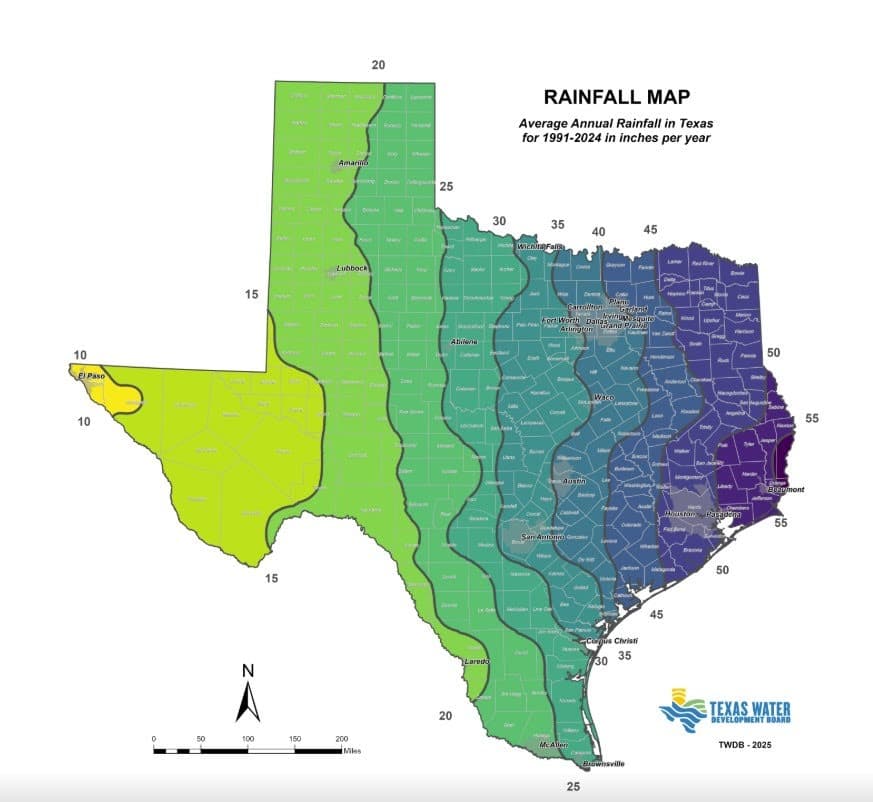
Enlarged Image
Rainfall map produced by the Texas Water Development Board, 2025
Rainwater harvesting is a viable solution for homeowners and landowners concerned over the escalating environmental and economic costs of centralized water systems, well drilling, and reliability in existing water supplies. The health benefits of rainwater and potential cost savings associated with rainwater collection systems have further spurred interest in the topic.
Long-term reliance on groundwater is unreliable in Texas. Recharge to the primary aquifer in MTGCD, the Trinity Aquifer, takes a very long time to recharge and only a small amount of annual precipitation (up to 2%) is estimated to recharge the aquifer. The Trinity is projected to be one of the most stressed aquifers in the State over the next 50 years, with large areas already seeing steep drops in water levels. Springs and streams that receive discharge from the Trinity will be affected, and continuous pumpage of the aquifer will continue to exacerbate the effects.
Rainwater is of exceptional water quality and is cost effective compared to typical ground- and surface water resources. Furthermore, rainwater harvesting is valued as a water conservation tool to reduce demand on more traditional water supply sources that may be of limited quantity or quality. As the population of Texas is expected to double over the next 50 years and existing water resources are already being depleted, rainwater harvesting provides the opportunity to conserve and extend existing resources while granting the homeowner independence from relying solely on traditional sources.
Understanding these benefits helps property owners make informed decisions about implementing rainwater harvesting systems that align with their specific needs, budget, and conservation goals.
- Lower monthly utility cost
- Often less expensive compared to drilling deep water well
- Potential tax incentives and rebates
- Conserves groundwater resources
- Reduces stormwater runoff
- Promotes use of native landscaping designs
- Homeowner is in control of their water supply
- Consistent water quality
- Reduced dependency on municipal water supply
- Attractive to eco-conscious buyers
- Enhanced property marketability
Economic Impact in Texas
$5K - $10K
Average total savings when comparing Rainwater to Deep Middle Trinity well
7-12
Years to payback
25+
System lifespan (years)